Distinguished Lectures
Distinguished Lectures
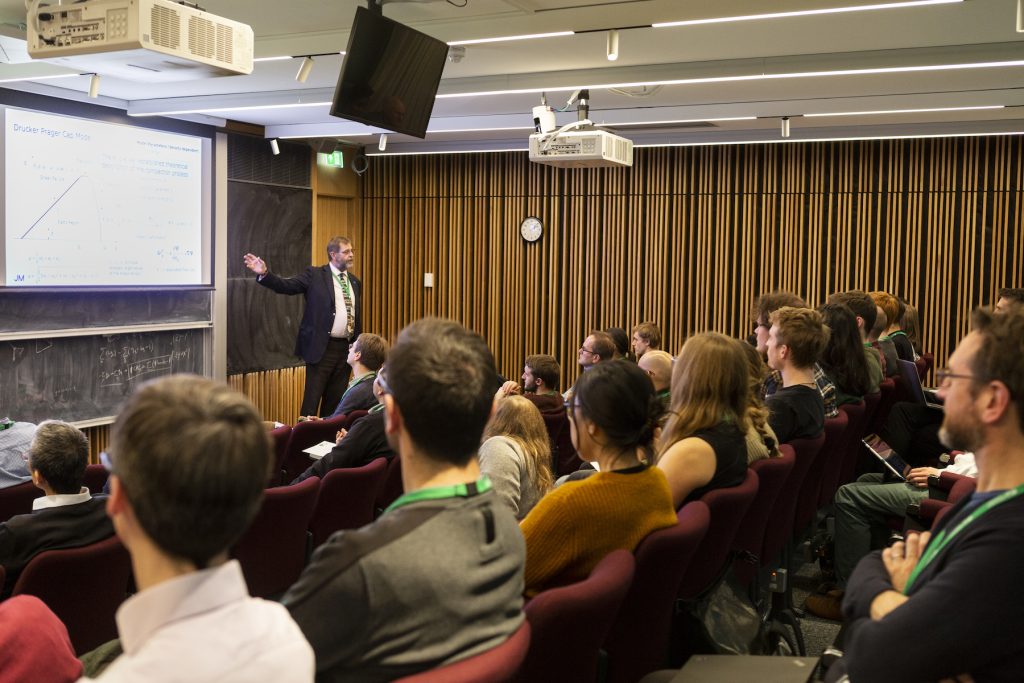
The Maxwell Institute runs four series of distinguished annual lectures, celebrating mathematicians who have made significant contributions to mathematics, the mathematical community, and the wider economy.
Atiyah Lecture
Sir Michael Francis Atiyah was a British-Lebanese mathematician who held appointments at the Institute for Advanced Study (Princeton, NJ), University of Cambridge, University of Oxford, Royal Society, and Isaac Newton Institute for Mathematical Sciences. His work in topology and analysis earned him the Fields Medal in 1966, followed by the Copley Medal in 1988 for his fundamental contributions to the mathematical sciences. In 2004, Sir Atiyah, alongside Isadore Singer, was awarded the Abel Prize for his development of K-theory which culminated with the creation of the Atiyah-Singer index theorem.
Sir Atiyah also received a knighthood in 1983 and the Order of Merit in 1992. From 1997 until his passing, he was an honorary professor at the University of Edinburgh.
Past Lectures
2021, Prof. Jean-Pierre Bourguignon: What is a Spinor? (available online)
2022, Prof. Thaleia Zariphopoulou: Human-machine interaction models and stochastic optimization.
2023, Prof. Edriss Titi: Determining the Global Dynamics of Infinite-dimensional Dissipative System by a Scalar ODE – The Navier-Stokes Equations Paradigm.
2024, Prof. Caroline Series: Arranging data in hyperbolic space.
2025, Prof. Tim Gowers: Where will automatic theorem proving be in 2030?
2026, Federico Ardila: The geometry of Matroids.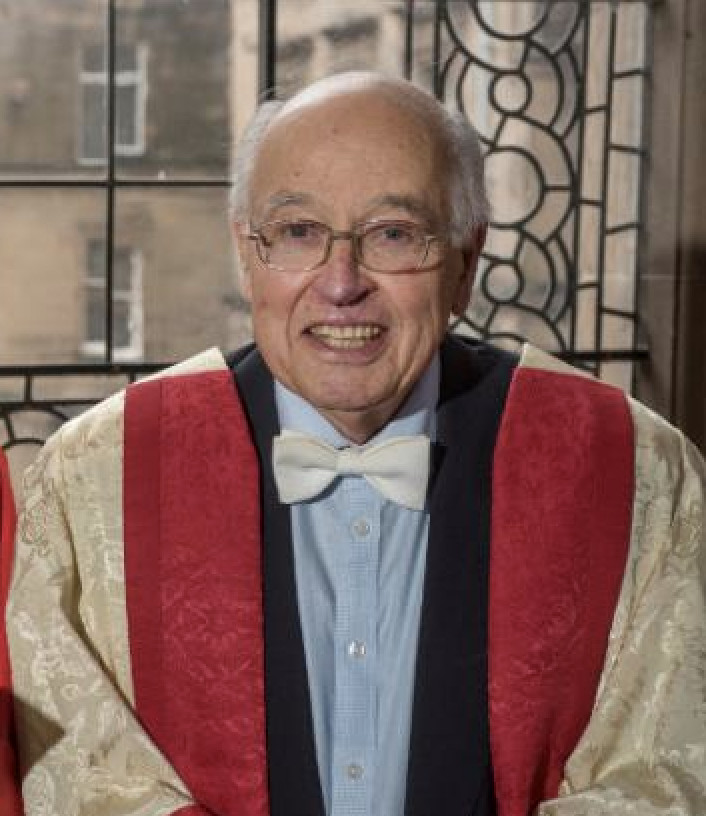
Finney Lecture
Professor David Finney was a statistician whose work pioneered the development of drug safety monitoring systems. Two of his most well-known publications – Probit Analysis (1947) and Statistical Method in Biological Assay (1952) – redefined their subject areas. Professor Finney was based at the University of Edinburgh from 1966 until 1984 when he retired.
Professor Finney was President of the Royal Statistical Society from 1973-74, President of the Biometric Society from 1964-65, a fellow of the Royal Society from 1955, a fellow of the Royal Society of Edinburgh, and was presented with a CBE in 1978. He also served on Advisory Committees for the FAO and WHO and chaired the Flowers Committee in 1970-74, which helped determine the way in which computing should develop in UK universities and research councils.
Past Lectures
Fitch Lecture
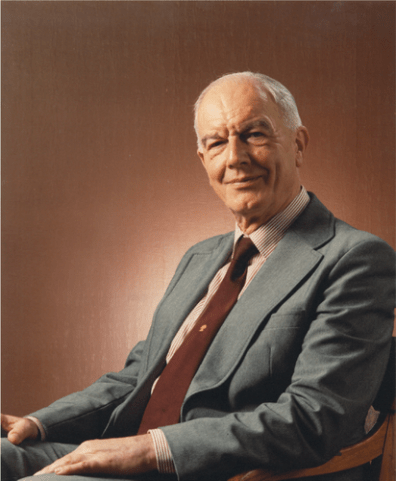
Davey Fitch was the University of Edinburgh School of Mathematics’ first Business Development Officer from 2017 to 2019. During his time in the role, Davey represented the School in front of many different audiences and developed a plethora of fruitful collaborations with industry partners, supporting researchers, postdocs, PhD students, and MSc studentships. His efforts allowed the School of Mathematics to gain a central position in the Bayes Centre and the City Region Deal. Outside of work, Davey was an avid runner and enjoyed completing half and full marathons.
Past Lectures
2021, Professor John Aston: Statistics, Science and Government: A Statistician as a CSA.
2022, Prof. Arnaud Doucet: An Unlikely Journey.
2023, Prof. Vicky Pope: Climate Change: How can mathematics help us to respond?
2024, Antoine Bavandi: Bigger, Stronger, more Sustainable: Climate Resilience through holistic Public-Private Risk Solutions.
2025, Peter Braam: Entrepreneurialism at the Edge of Science
2026, Dr Heather Tewkesbury: Why Mathematics Matters – from chocolate to nuclear reactors, our economy, environment and society needs mathematics, and mathematics needs everyone to contribute.
Whittaker Lecture
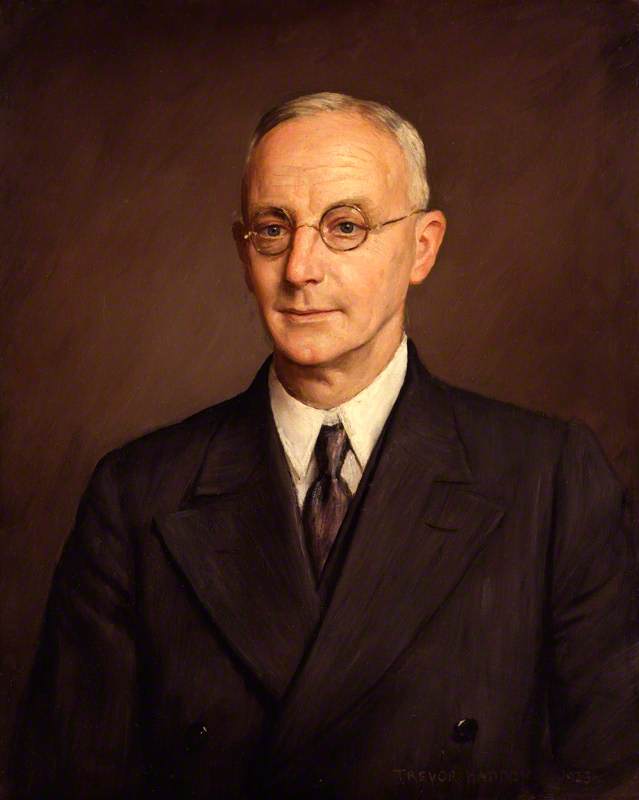
Sir Edmund Whittaker was an English mathematician whose contributions to special functions, an area of interest in mathematical physics, pioneered the subject. During his career, Sir Whittaker was a fellow of Trinity College, Cambridge and the Royal Society. He was the Professor of Astronomy at the University of Dublin from 1906-1912 and appointed Astronomer Royal of Ireland. From 1912 until his retirement in 1946, Sir Whittaker served as a Professor of Mathematics at the University of Edinburgh and received a knighthood in 1945.
Sir Whittaker also made major contributions to the study of dynamical problems (such as the three-body problem) and differential equations. In 1954, he was awarded the Copley Medal.
Past Lectures
2020, Prof. Yuri Tschinkel: Rational points, rational curves, and rational varieties.
2021, Prof. Claire Voisin: Hyper-Kahler Manifolds
2022, Prof. James Maynard: Primes, the zeta function, and zero density estimates.
2024, Prof. Kavita Ramanan: Interacting Particle Systems on Sparse Random Graphs.
2025, Prof Ana Caraiani: Congruences and the p-adic geometry of Shimura varieties